

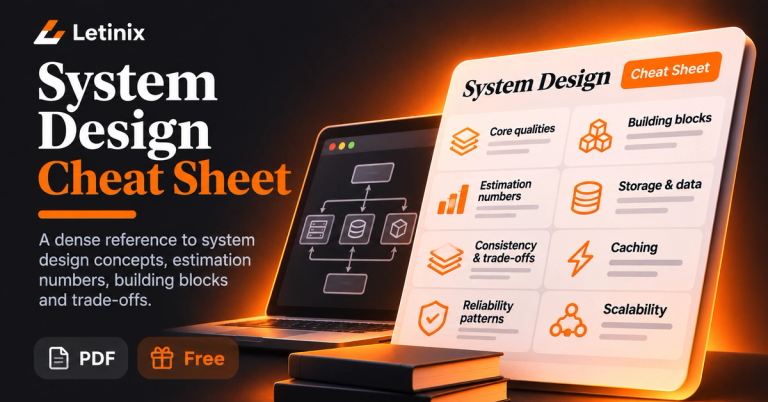
System Design Cheat Sheet
A dense reference to system design concepts, estimation numbers, building blocks and trade-offs.
- Type
- Reference
- Access
- Free
- Format
- Published
- Nov 2, 2026
Hosted on Gumroad. It opens in a new tab.
What's inside#
- A six-step method for approaching any system design
- Core qualities with precise definitions, plus an availability "nines" table of allowed downtime
- Back-of-the-envelope estimation: time and data-size conversions, formulas and a worked example
- Building blocks, from load balancers and CDNs to queues and search indexes
- Storage choices, replication and partitioning strategies
- Consistency models, CAP and PACELC, and SQL isolation levels
- Caching strategies, eviction and failure modes, and communication styles
- Reliability patterns, rate-limiting algorithms and observability
- A trade-off table and twelve questions to ask of any design
How to use it#
- Keep it open while you design, review a design doc or prepare for an interview.
- Follow the six-step method on page 2 to structure your thinking.
- Use the estimation page to size the system before choosing components.
- Finish with the review questions on the last page.
Limitations#
- It's a summary. Each topic deserves deeper reading before you depend on it in production.
- Estimation numbers are for orders of magnitude. Measure real systems before committing to capacity.
- Database behavior varies by engine and version; check your own database's documentation.
License
Free to use, share and adapt, including commercially, as long as you credit Letinix and link to this page. Licensed under CC BY 4.0.
Related reading
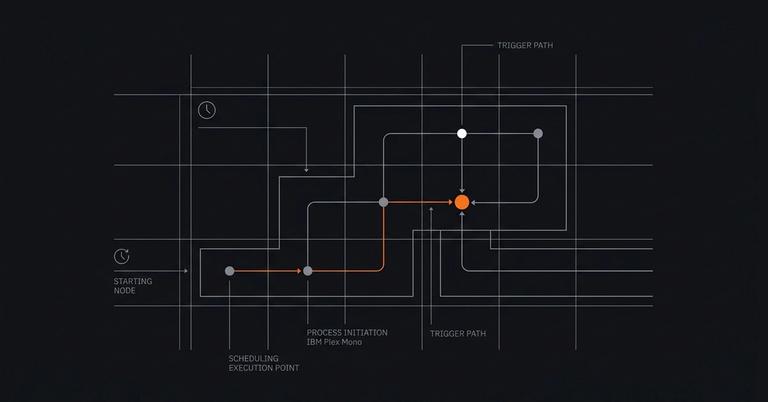
Node.js Scheduled Jobs: When to Use Cron Instead of a Timer
Choose between an operating-system scheduler, a dedicated cron scheduler, and an in-process timer by considering persistence, deployment, overlap, and failure recovery.
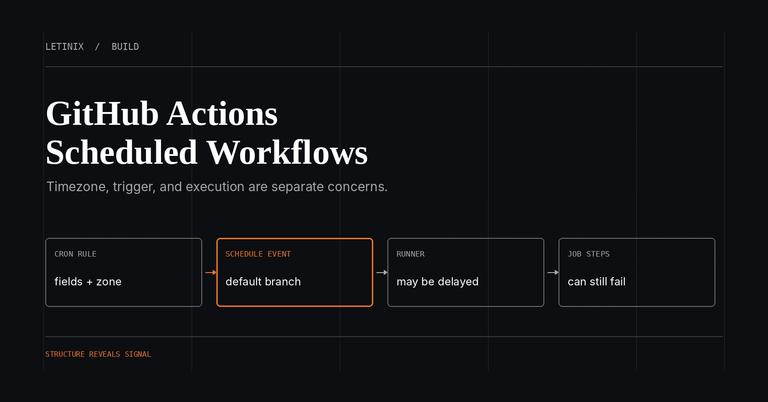
GitHub Actions Scheduled Workflows: Time Zones and Common Failures
Configure GitHub Actions schedule events with the right cron syntax and timezone, then troubleshoot workflows that run late or stop triggering.
I Didn’t Rebuild My Portfolio to Look Better. I Rebuilt It to Be Found
A portfolio is often treated as a visual résumé: a polished landing page, a few project cards, and a contact link. I wanted mine to do more. This rebuild was about turning my portfolio into a durable professional platform. One that clearly
Related tools
More resources
Technical Design Doc Template
A free template for proposing a system change, showing the evidence behind it, and getting a clear decision from reviewers.

Tech Lead Toolkit
Five printable worksheets for tech leads: delegation levels, stakeholder map, decision brief, pre-mortem and one-on-one template.

React Production-Readiness Checklist
A pre-launch checklist for React apps covering architecture, performance, accessibility, security, testing and release.