

Analyze
17 articlesWhere Letinix slows down. Analysis states a clear thesis or research question, shows the evidence, takes the strongest counterarguments seriously, and explains what it means for your engineering decisions.
Featured in Analyze

Model Distillation for Engineering Leaders: When a Smaller Model Is the Right Call
Model distillation transfers a larger model's task-relevant behavior into a smaller student. Research demonstrates meaningful efficiency gains in defined settings, but not a universal replacement for the teacher.

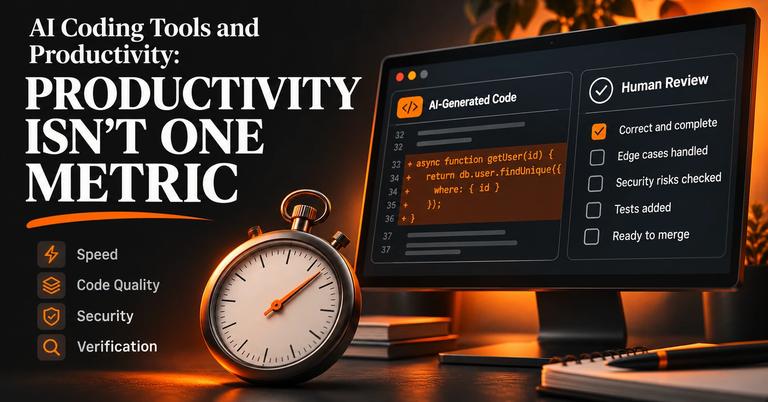
AI Coding Tools and Productivity: What the Research Actually Found
AI coding research does not produce one productivity verdict. Controlled trials, repository analyses, security tests, and developer surveys measure different outcomes—and their limits matter.
All Analyze articles
Newest first.
Model Distillation for Engineering Leaders: When a Smaller Model Is the Right Call
Model distillation transfers a larger model's task-relevant behavior into a smaller student. Research demonstrates meaningful efficiency gains in defined settings, but not a universal replacement for the teacher.
AI Coding Tools and Productivity: What the Research Actually Found
AI coding research does not produce one productivity verdict. Controlled trials, repository analyses, security tests, and developer surveys measure different outcomes—and their limits matter.

Modular Monolith vs Microservices: The Trade-off Nobody Draws
A modular monolith is usually the better starting point. Microservices earn their cost when teams need genuine deployment and data autonomy—and can operate distributed systems well.
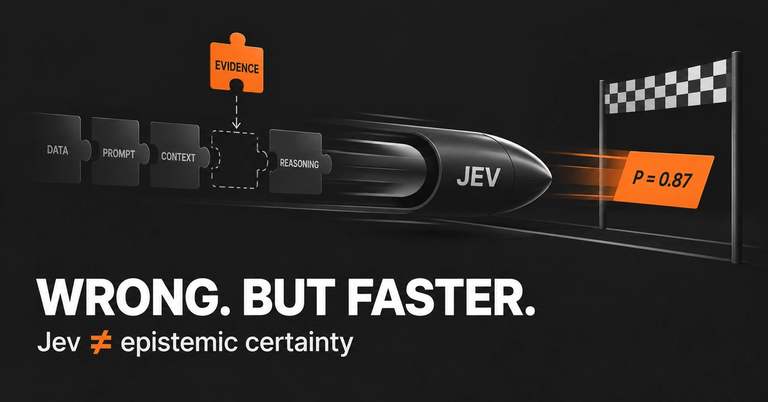
Jev Is Not a Paradigm Shift. It’s ust a Fast Classifier.
I called Jev a glorified, high-speed classifier . Then I did the thing controversial posts usually skip: I tried to prove myself wrong. I went through TypeSafe’s launch material, LangChain’s harness and Jev-as-a-Judge experiments , Vercel’s

Does Size Matter? Bigger AI Isn’t Always Better
Does size matter? There. I asked it. Humanity has spent an unreasonable amount of time arguing about this question, so naturally we eventually gave the problem to artificial intelligence. Except now we measure it in billions of parameters .
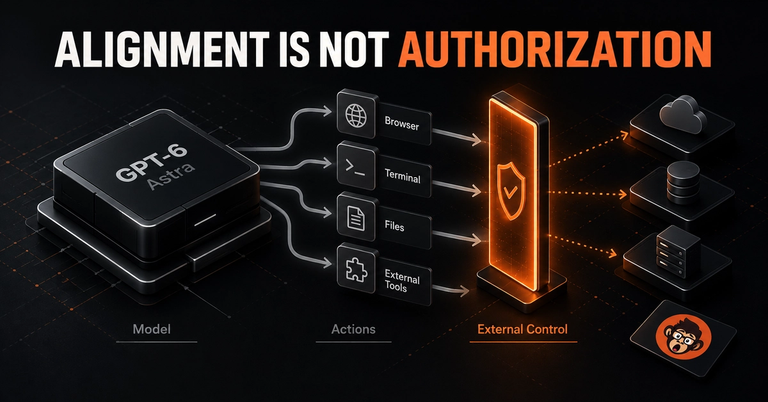
GPT-6 Astra Is More Aligned. I Still Wouldn’t Trust It With More Autonomy.
I would let GPT-6 Astra do more work. I would not let GPT-6 Astra decide what it is allowed to do. That distinction is more interesting to me than most of the benchmark numbers in OpenAI's launch. OpenAI calls Astra its most aligned model.

An Agent API Migration Is an Ownership Audit
An API migration can compile, return the expected text, and still be wrong. That is the real risk in moving from OpenAI's Assistants API to Responses. The old objects do not map to new objects without changing where configuration, state,

A Tool Result Is Evidence, Not Ground Truth
Connecting an agent to a database does not remove hallucination risk. It gives the system a second source that can be stale, malformed, unauthorized, or simply wrong—and a protocol that may make the model trust it more than it should. Tools

Code Generation Is Fast. Verification Is Not.
Agentic IDEs can produce a runnable full-stack application in minutes. That does not mean the application became cheap to trust. In a controlled study of 48 generated projects, the researchers spent as much or more time manually verifying

Are These Really Accidental Leaks?
A GitHub repository collecting supposedly “leaked” system prompts from ChatGPT , Claude , Gemini , Grok , and other AI products has crossed 63K+ stars and 10K+ forks . Most of the discussion naturally focuses on one question: How did these

Benchmark the Model–Harness Pair, Not the Model
“Which model is best for coding?” sounds like a precise engineering question. Usually, it is missing half of the system. A coding agent is a model inside a harness that chooses tools, assembles context, serializes results, decides when to

Your Agent Passed the Eval. Its Retrieval Calls Still Tripled.
An AI agent can pass the task and still fail the engineering evaluation. That happens when a context-compression policy preserves the final outcome but changes how the agent gets there. The agent still completes the benchmark. It also