

On this page
More Thinking Doesn't Always Mean Better Answers#
Reasoning models are designed to think step by step, and the common assumption is simple:
More thinking = better results.
I expected reasoning models to dramatically outperform simpler ones.
Surprisingly, the improvements weren't always as large as expected.
Sometimes AI just spends more computation reaching nearly the same answer.
Bigger Brain, Bigger Bill#
Reasoning comes with costs:
- More tokens
- More GPU time
- More energy
- Higher latency
- Higher costs
Like using a supercar for a five-minute grocery trip, extra power isn't always necessary.
The Real Question#
The important question isn't:
"Can AI think harder?"
It's:
"Does thinking harder consistently produce better results?"
The answer appears to be: not always.
Just as humans can overthink, AI can sometimes add complexity without adding much value.
Complexity Has a Cost#
We often equate complexity with intelligence, but efficiency matters too.
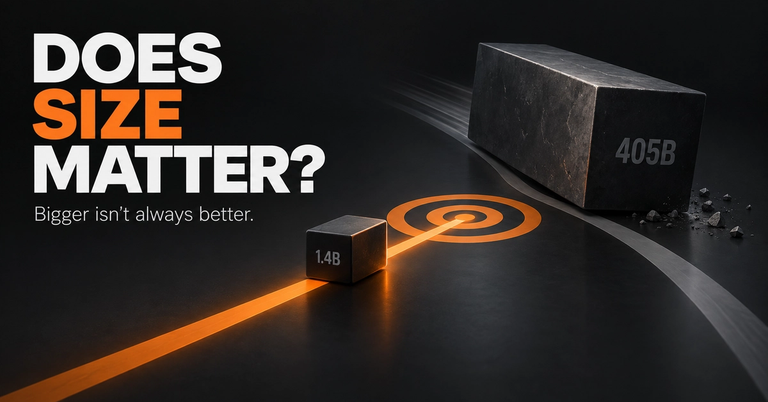
More parameters and longer chains of reasoning don't automatically mean better outputs.
Sometimes effort is mistaken for effectiveness.

There's an Environmental Cost Too#
Longer reasoning means more computation and more electricity.
At scale, millions of extra tokens translate into higher energy consumption and a larger carbon footprint.
Smarter AI should also aim to be more efficient.
Better Prompts Can Matter More#
Another surprise: clearer instructions often improve results significantly.
Not bigger models.
Not more reasoning.
Just better communication.
Sometimes asking better questions matters more than thinking longer.

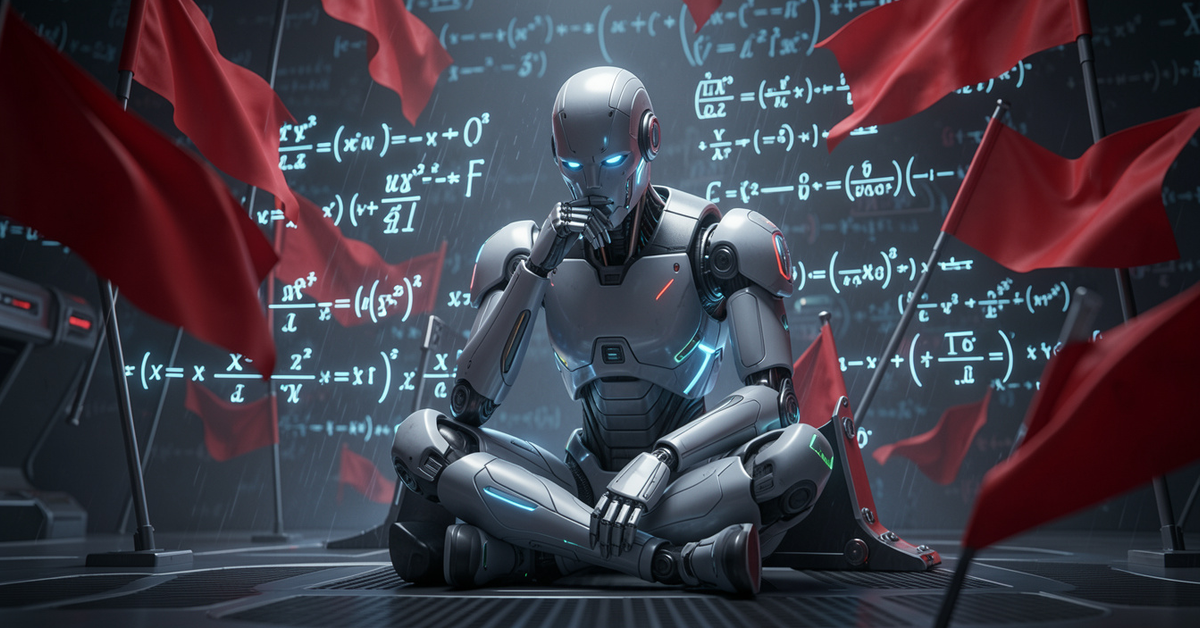
So, Is Overthinking a Red Flag?#
Not always.
Complex problems need deep reasoning.
But many tasks don't.
In some cases, answers produced in 5 seconds are nearly identical to those produced in 50.
The real goal may not be building AI that thinks harder, but AI that knows when to stop thinking.
And that might be the smarter approach.
One More Thing 📚#
I originally wrote this post while working on a research paper about the same question.
If you're curious about the detailed experiments, results, and comparisons, you can find them in the paper. This post is more about the strange ideas, surprising observations, and "Wait, what?!" moments I ran into along the way.
Zubair, M. A., Bouchelligua, W., Danish, S., Ahmad, S., & Ksibi, A. (2026). Evaluating AI Reasoning and Prompt Engineering in Automated Test Case Generation: A Comparative Study of GPT-4o, O1 Models, and Human QA. Applied Soft Computing, 201, 115708. https://doi.org/10.1016/j.asoc.2026.115708
Apparently, "Wait… what?" is a valid research methodology.
And honestly, that's the fun part.

Software Engineer and Researcher, writing about AI, developer tooling and automation.